Scriptorium Workshop

The first workshop today was very insightful. Although we have learned a lot about manuscripts and illumination through studying images and handling ancient books, the hands-on experience today was invaluable. We observed a shortened process of making paint and I can only imagine that grinding down the materials into the powder must take a lot of work and time as well.

I am not the most artistic person, therefore drawing the historiated letters was a bit challenging. I wonder how much planning, or how many drafts the illuminators did before they were satisfied with the final product.

I am guessing that the artists had formal artistic training (at least that is what I am telling myself so I feel better about my historiated letters). Hopefully with next class to practice some more, my letters will improve dramatically!

Lost in the Pictures

My Name is Red is an interesting work of ekphrasis that enables readers to appreciate art in various forms. One quote that I think resonates with most people is in Chapter 34, when Shekure describes the illustrations left behind by the murderer. She says, “I’d lost myself in the pictures” (p. 208). I believe at one point or another everyone has experienced what it’s like to “get lost” in a work of art. It’s important to recognize that even though the quote only mentions pictures, other works of art that are not just visuals have a way of also captivating admirers. Whether it’s staring at a portrait, listening to a piece of music, reading a poem, or walking through an art gallery, some works of art have a way of consuming an audience. I think this novel made it clear that art is not just about visual images, but can come in a variety of forms, such as reading words on a page.

In Chapter 34, Shekure says,“These illustrations were beautiful enough that you might mistake them for your own forgotten memories; and as with writing, as you looked at them, they spoke” (p. 208). This description makes the comparison between the power of seeing illustration and reading words, both of which emulate meaningful messages. The entire novel successfully communicates artwork, images, and scenes through language alone and speaks to the power of verbal description.

Art as Relaxation

“I don’t think I’d make a great miniaturist” I said as I worked on my own historiated letter today in class. “I just don’t have the patience.”

I’ve never been one to take my time, and the more we study the practice of illumination, the more in awe I am at the abilities of the original miniaturists – not necessarily at the miniaturists’ artistic abilities (although this is impressive in itself) but more so at their ability to sit down for hours upon hours working on the tiniest of details.

For those miniaturists the thought of God or Allah is what kept them immersed and focused everyday. The act of art was an act of mediation.

Despite my typical impatience and restless nature, I did find myself getting into the groove…. the tranquil music, the falling snow…. cliche I know, but my mind slowed and I became more mythical in my art.

My new gained focus reminded me of a recent meditation practice called Zentangle. Zentangle is a method of meditation through doodling. My aunt introduced me to the practice when I was in high school and whenever I needed to procrastinate, I would turn to Zentangle.

Illumination is just like Zentangle I thought to myself. Similar to how illumination keeps your mind from wandering and focused on God/Allah, Zentangle also keeps your mind from wandering. Both are forms of mediation.

I find it interesting that, even after all these years, the act of making art still has the same intention – to calm and to encourage focus.

Attempting to Illuminate

Our class experience today was both educational and entertaining. Working with medieval pigments and attempting to create illuminated art was eye opening for a couple of reasons…

– Creating artful images was far more difficult than I perceived. I assumed that the inspiration would flow and my historiated letter would tell a new story… However, I found myself pulling up YouTube videos to show me how to create simple, easy-to-do patterns.

– The creation of paints was a neat thing to experience. As Christian was adding the gum arabic to the pigments, I realized just how long of a process it is to get the perfect consistency of paint. Lots of effort went into creating just a small dose of product.

Today was confirmation that enormous amounts of time and effort had to be put into creating illuminated manuscripts – if you wanted them to be remarkable. It is not something anyone can pick up in a day… the mastery comes with years of practice.

Red: West bleeds into East

Through both form and content, Pamuk’s My Name is Red explores the subtle and non-linear ways in which Western ideas infiltrated Eastern art in the sixteenth century. The title emphasizes a western takeover in multiple ways. The very phrase “my name is” becomes a claim to subjectivity, an explicit assertion of agency. For this one one color to speak, while the others are not given voices in the novel, speaks to Pamuk’s wish to draw attention to the particular power of red.

The chapter on red begins with a sweeping paragraph that explains the enduring presence of the color. It bears witness to all of the core events of the world, subtler at first.  Still, the chapter closes with an authoritative statement. It states: “Thereby, as I bring my color to the page, it’s as if I command the world to ‘Be!’ Yes, those who cannot see would deny it, but the truth is I can be found everywhere” (188). Red addresses its own power to take over a page, and to capture the eye. The color acts like the West in the face of the world, inevitably dominating any image (i.e. any space/country) in which it appears. There is an oppressive, suffocating edge to this idea that recalls the violence and heedlessness of the West’s imposition upon the East. Furthermore, red is implicitly linked to pain and violence because it is the color of blood, and in turn, it is linked to fear.

The entire book circles around the Western concepts of individual style, originality and and agency that clash with Eastern cultural and religious values. As red bleeds, increasingly, yet somewhat imperceptibly, into eastern manuscript pages, the people resist its power and its connotations. Similarly, as Western artistic tendencies seep into Eastern communities, artists, like the miniaturists in the novel, actively resist. This color lends force to the artwork, and establishes a precarious artistic authority that eastern artists were largely uncomfortable with. Red eclipses, overshadows, ruins illustrations. It flies in the face of rigid tenants of faith that shaped Persian society, threatening to bring down structures upon which it seemed their entire world was built.  Red is the West.

Anonymity in Eastern Art

Pamuk addresses the struggle of Eastern culture and art as they struggled to reconcile tradition with western influence. Because Islam condemns the practice of idolatry, the majority of Islamic art is centered upon scripture, geometric patterns and interlacing decorative designs known as arabesque (seen below).

This belief that all illustrations should be done from the perspective of Allah and not the artist himself seems to be in contradiction with the practice illuminated manuscripts that demands the artists’ discernment. We see such tensions being played out in the various passages such as “I am a Horse”. For the duration of the passage, the horse questions the sensibility behind his illustration–pointing out inconsistencies that are physically impossible  such as both of his forelegs extending out at once. This is symbolic of people beginning to challenge the system and traditional way of thinking. Whats more, the fact that horse is instrumental in figuring out who the murderer is, makes me wonder to what extent can you enforce anonymity in a painting? Is it ever possible to really avoid all style and uniqueness on the part of the illustrator?


Identity of the Artist

A central theme in My Name is Red is the struggle between Eastern and Western art. The Eastern ideal states that the viewer should not be able to tell who the artist of an illumination is because by incorporating his own signature into his painting style, the artist seeks to take credit for his work and is therefore creating it for his own benefit instead of for Allah. Throughout the novel, it is shown that even those who outwardly profess to believe in this Eastern ideology do not truly buy into it. For example, Nuri Effendi tells Black, “it is important that a painting, through its beauty, summon us […] toward reflection and faith. The identity of the miniaturist is not important” (58).

However, on the next page Nuri shows off his own work to Black, “proudly [stating] that he finished a gilded royal insignia for Our Sultan” (59). In showing pride in his work and wanting Black to know that it was he who the Sultan hired to paint, Nuri betrays that he really does put stock in the identity of the miniaturist. I wonder if these inconsistencies in ideology are Pamuk’s way of showing how Istanbul is changing and becoming Westernized, or if he believes that the Eastern stance on art is an impossible ideal. Is it really possible to create a great piece of art without wanting credit for one’s work?

Art and Time

A recurrent theme in Orhan Pamuk’s My Name is Red is the the relationship between time and art. Stork tells three stories to suggest the idea that books “last until the end of the world.” (69) It is interesting to consider that while miniaturists, artists and even their masters pass away – such as with Elegant Effendi and Enishte Effendi, books and manuscripts may be bound to be finished and live on. Whereas the miniaturists in the novel speak about the art they create as the only focus of their life and the proof of their devotion to Allah, it is possible the art doesn’t need the artist the way the artist needs the art. However, Enishte Effendi stated the opposite when he claimed that  “In the end, our methods will die out, our colors will fade. No one will care about our book and our paintings […]. Not only our own art, but every single work made in this world over the years will vanish in fires, be destroyed by worms or be lost out of neglect” (171). While it is true historical events and time sometimes destroy art works, I cannot help but feel like humans create art in order to leave a mark that is going to transgress the boundaries of time in ways we can’t.

Counterfeit Money, Imitation, and Deceit

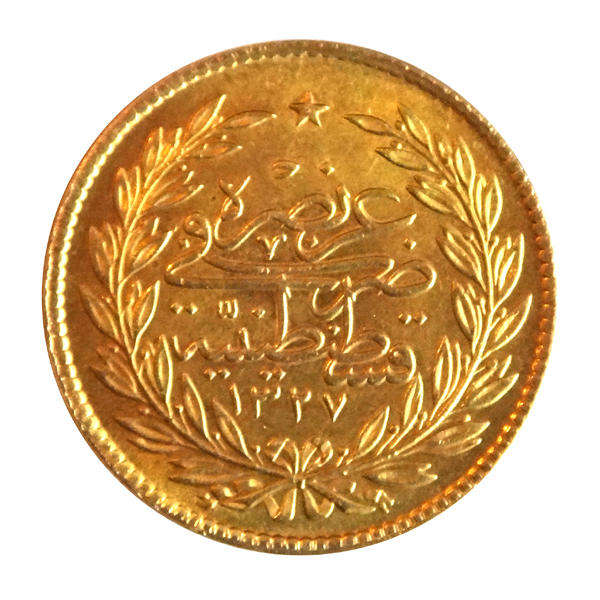
Chapter 19, “I am a gold coin”, really emphasized the theme in this novel of real vs imitation, as well as honesty vs deceit.  The coin speaks to us, telling us of its journeys from hand to hand, and then reveals to us that it is actually counterfeit gold. The idea of counterfeit money is interesting–if no one can tell it is counterfeit, and the money is accepted by all, then no one will ever be cheated from the coin. This plays to the idea of imitation from the miniaturists. The Eastern way of painting was to paint such that paintings of new and old were indistinguishable, and style was nonexistant– essentially imitation. I think the parallels between the circulation of counterfeit money and the circulation of imitated paintings is an interesting pairing. The coin also points out that it essentially drives all desires. On page 106, it states “If I didn’t exist, however, no one would be able to distinguish a good artist from a bad one, and this would lead to chaos among the miniaturists; they’d all be at each other’s throats.” This quotation describes how money is used to distinguish miniaturists in their art–even though they are not supposed to paint for glory/money and instead paint for Allah, money unavoidably exists as a source of competition between the miniaturists. 

Blindness in “My Name is Red”

One prominent theme in Orhan Pamuk’s My Name is Red is sight and its opposite: blindness. These two terms each have certain connotations depending on the context and who is speaking about them throughout the novel. In class, we noted that Master Osman scrapes away the eyes in some paintings since eyes can symbolically connote individuality and uniqueness of an artist’s lens and the subject of their depiction (321).

Many characters explain the Eastern theory that the masters among the miniaturists should be able to go blind from their strenuous work and still be able to depict things in Allah’s perspective due to their memory and the imbedded nature of the craft, which they’ve done for so long. Some like Olive, in his Three Stories on Blindness and Memory, go as far to say that blindness actually helps them in seeing this: “‘Since my eyes will no longer be distracted by the filth of this world, I’ll be able to depict all the glories of Allah from memory, in their purest form'”(77).

I wonder if you could see this idea of blindness in a reverse perspective – while allowing miniaturists to focus on Allah’s perspective and the craft they’ve trained themselves to know, it also disables them from seeing anything outside of that. As it’s typically thought of in the Western perspective, blindness is restrictive. And if Master Osman ultimately tries to blind himself because he wishes to see in concepts, then he is also allowing himself to not be tempted by any other possibly contradictory perspectives. In the Eastern perspective pushed by certain characters in the book, there is a power to limiting the extent of the world that you can see (and deem as important) through physical blindness and selective memory.

css.php